
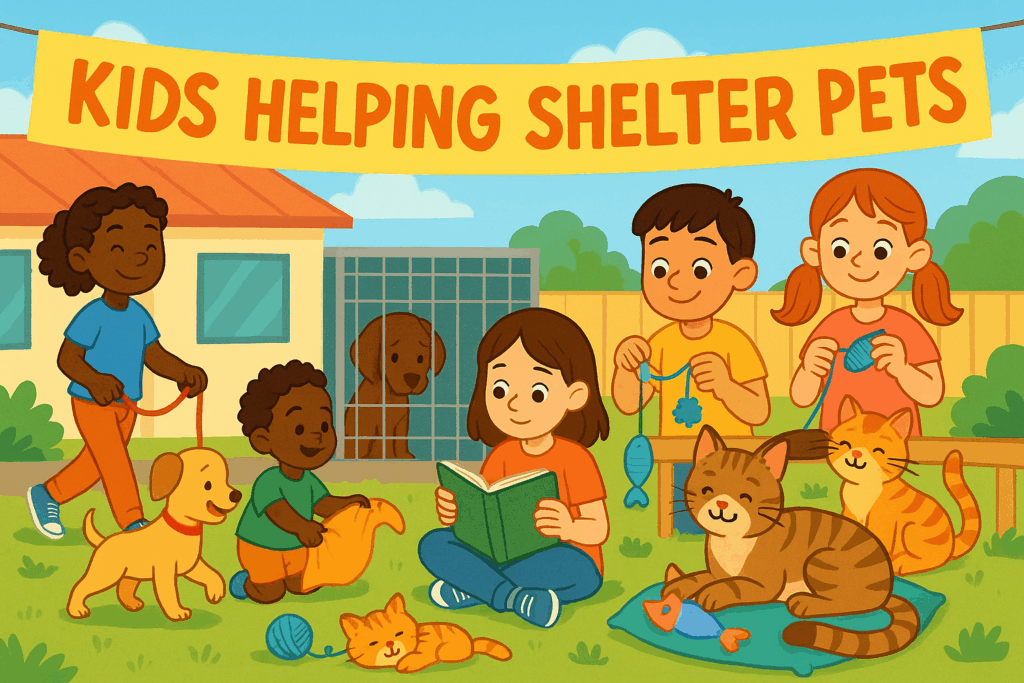
Animal shelters aren’t just places for grown-ups to volunteer – children and youth of all ages can get involved and make a real difference for homeless pets. From toddlers with big hearts to teens with big ideas, every young animal lover can play a role in helping shelter animals. Below, we explore a wide range of age-appropriate activities – at home, at school, and in the shelter – that kids can do to support animal shelters. You’ll find fun, creative, and meaningful ways for toddlers, elementary kids, middle schoolers, and high schoolers to help, along with tips to keep these experiences safe, positive, and rewarding for everyone.
Toddlers & Preschoolers (Ages 2–5)
Even the littlest children can show love to shelter animals with plenty of adult guidance. At this age, it’s all about simple, supervised activities that nurture empathy and kindness.
- Colorful Crafts for Comfort: Young kids love crafts, and their creations can brighten a shelter animal’s day. Let toddlers finger-paint a cheerful poster to hang at an adoption event or draw pictures of pets to decorate the shelter’s walls. Parents can help preschoolers make very simple pet toys or blankets – for example, cutting fleece into a no-sew puppy blanket and letting the child help tie the knots. These do-it-yourself donations bring a bit of home comfort to shelter pets and make your little one proud to help.
- Storytime with Shelter Pets: Many shelters have “read to the animals” programs, and some will allow children as young as 5 or 6 (with a parent) to participate. Even if your toddler isn’t reading yet, they can still enjoy storytimevisits where they listen to animal-themed picture books while gentle shelter pets relax nearby. This is a sweet way to build empathy at an early age. For instance, one shelter invites kids to sit outside a dog or cat’s kennel and read aloud calmly, which comforts shy animals and boosts kids’ confidence. A parent or guardian must always be present, of course, ensuring the child is gentle and the pet is comfortable.
- Helping with Donations: Little kids love to be “helpers.” Involve your toddler when you gather items to donate. They can assist in picking out a bag of pet food or a toy at the store for “the kitty cats and puppies.” When you drop off donations at the shelter, let your child hand over a can of food or a blanket to the staff. This simple act makes them feel involved and teaches generosity. It’s also a great opportunity to talk about what shelters do and how “we are helping the animals” in terms they can understand. Always keep these visits short and positive – maybe just a quick hello to a calm animal – so it’s a happy experience.
- Learning Gentle Care: At home, you can nurture compassion by teaching your little one how to gently pet and care for animals. If you have a family pet, involve your toddler in simple tasks like filling the water bowl or giving treats (with supervision). Role-play “animal shelter” with stuffed animals – your child can pretend to be the caregiver, practicing kindness and soft voices. These at-home lessons prepare them for real interactions with shelter animals later on. Emphasize being “soft and nice” with animals, and celebrate your child when they show gentleness. You’ll be laying the groundwork for a lifetime of empathy.
Elementary School Kids (Ages 6–10)
Kids in early elementary school are full of energy and curiosity – the perfect combo for helping animals! At this age, children can take on more responsibility with guidance and can understand the idea of charity. Here are ways that grade-schoolers can get involved:
- DIY Donations and Projects: Elementary-age kids are capable of more complex crafts and projects that help shelters. Set up a crafting afternoon to make toys and treats for shelter pets. For example, your child can create braided tug toys out of old T-shirts or fill toilet paper rolls with socks to make cat toys. Baking dog biscuits is another fun activity that even sneaks in some math and measuring practice (heart-shaped cookie cutters make it extra fun). After crafting, take your child to deliver the goodies in person. They’ll beam with pride seeing a dog wagging its tail for the toy they made. Some shelters even encourage kids to make these items as part of service projects, because enrichment toys and blankets are always needed for the animals. One idea from educators is to snap photos of the pets enjoying the gifts and post them on the classroom wall or family fridge, reminding kids of the difference they made.
- Junior Fundraisers: Children love activities like lemonade stands, bake sales, and penny drives – and these can be turned into powerful fundraisers for shelters. With some adult help, your child could sell lemonade, homemade cookies, or even their old toys to raise money for the local shelter. Birthday parties are another great opportunity: instead of regular gifts, your child can ask friends to bring pet food, toys, or small donations for the shelter. Many compassionate kids have done this. For example, two 10-year-old girls asked for donations instead of birthday presents and raised enough money to buy warm beds so shelter dogs wouldn’t have to sleep on cold concrete. Another 9-year-old boy in New York decided to donate his birthday, raising $1,325 for an animal rescue group in lieu of gifts. These kinds of selfless acts not only help the shelter, they also instill a sense of pride and generosity in your child. Holiday drives can work the same way – your child might collect items around Christmas or “Stuff the Stocking” with pet supplies for the shelter. Keep fundraisers fun and manageable, and let your child feel ownership of the project.
- School and Classroom Involvement: Elementary school classrooms can incorporate shelter help into learning. Teachers and parents can encourage kids to do reports or art projects about pet care and shelter animals. One particularly heartwarming example is a second-grade class in Virginia that wrote persuasive letters and drew pictures on behalf of shelter pets. Each student “adopted” a shelter dog or cat on paper and wrote a letter like they were that pet, begging for a forever home. The letters (with adorable crayon drawings) were hung on the animals’ kennels – and the project was a huge success. Out of 24 hard-to-adopt pets featured, 21 found new homes shortly after the letters went up! This shows the power of kids’ creativity to raise awareness. Your child’s class could try something similar or even make posters to advertise adoptable pets in the community. Elementary schools can also hold supply drives (e.g. a towel and blanket collection) or host guest speakers from a local shelter. Field trips to the animal shelter are another great idea if the school is open to it – seeing the shelter firsthand can make a lasting impression on young students. The key is to harness kids’ natural love for animals in an educational way: they learn about compassion and responsibility while actively helping the shelter.
- Reading-to-Animals Programs: By the time kids are around 6 or 7, many can participate in “Reading to Pets”programs that some shelters and libraries offer. In these programs, children sit by a kennel and read books to shelter dogs or cats. It might sound silly, but it’s incredibly beneficial – the animals enjoy the company and the soothing sound of a kid reading, and the children get to practice reading aloud without judgment. For example, the Rescue Readers program at one shelter welcomes kids as young as 6 to read aloud to adoptable cats and dogs (with an adult present). The kids gain confidence in their reading skills while helping shy pets become more comfortable with people. Often, shelters report that dogs who hear regular reading become calmer and more adoptable. If your local shelter doesn’t have a formal reading program, you could still ask if your child might come in to read to the cats or the more easygoing dogs at a quiet time. Always coordinate with shelter staff and follow their guidelines (and as always, supervise closely), but know that this gentle activity can be a win-win for kids and animals alike.
- Kids’ Clubs and Camps: Some humane societies run kids’ clubs or humane education camps tailored for elementary-age children. If available, these programs are a wonderful way for your child to engage with shelter work in a structured setting. For instance, a shelter might have a monthly Kids Club where members (typically ages 6–12) meet to do service projects like making pet toys, touring the shelter, or hearing from animal experts. Summer day camps at shelters often let kids spend a week learning about animal care, helping with feeding or grooming demonstrations, and interacting with gentle shelter animals under staff supervision. These experiences are not only fun (what kid wouldn’t want to play with puppies or bunnies?), but they also teach respect for animals and responsible pet ownership. Check if your local shelter offers humane education programs or “Critter Camps” for young kids. Such programs give children a memorable, hands-on way to help animals and often spark a lifelong interest in animal welfare.
Young volunteers fostering rescue puppies. Many shelters allow families to foster animals, and elementary-age kids can participate under their parents’ care. Fostering means taking a homeless pet into your home temporarily until it’s ready for adoption, and it’s an amazing learning experience for children. Grade-school kids can help by filling food bowls, playing gently with foster kittens or puppies, and helping their parents groom and socialize the animal. They’ll witness firsthand what goes into caring for a pet and feel the pride of saving a life – because every foster home makes room for another animal to be rescued. If your family is able, fostering with your child’s help can be incredibly rewarding (just be prepared for some tearful goodbyes when the pet gets adopted!). Always involve your child in age-appropriate foster tasks (like cuddling and feeding, not cleaning litter boxes with chemicals) and celebrate the happy day when your foster pet finds a forever home, so your child understands it’s a success to be proud of.
Middle Schoolers (Ages 11–13)
Preteens and young teens are capable of more independence and responsibility, and they can take their shelter volunteering to the next level. At this age, kids often have a strong drive to make a difference. Here’s how middle schoolers can channel that passion into helping shelter animals:
- Volunteering with Supervision: Many animal shelters set a minimum age for on-site volunteers, but often kids in this middle school range are allowed to help in certain ways if a parent or guardian volunteers alongside them. Typically, shelters might allow 12- or 13-year-olds to volunteer with a parent present, especially for handling smaller or calmer animals. For example, one shelter reported that they allow kids about 10–15 to volunteer with a parent, but the adult must handle tasks like leashing and walking the dogs, while the child can assist and interact under guidance. The parent and child attend orientation together and follow all the rules, ensuring safety. So, if your early teen is eager to volunteer, consider making it a family activity – you can sign up as a volunteer team. Duties might include cleaning cat cages, refilling water bowls, socializing kittens (a favorite job!), folding laundry, or making enrichment items for the animals. Some shelters have “junior volunteer” programs specifically for youth in this age bracket – for example, a humane society might host a Junior Volunteer Day where 11–15 year-olds come with parents to do a set of supervised tasks. Middle schoolers can get a taste of real shelter work this way. They learn responsibility and get quality time with you, too. Just remember that the adult needs to be fully engaged and ready to model safe animal handling at all times. With the right supervision, volunteering can be incredibly motivating for a young teen and set the stage for more independence later on.
- Independent Community Service Projects: Around this age, kids might start undertaking service projects for school, Scouts, or religious groups – which can easily be directed toward helping shelters. Encourage your middle schooler to pick an animal-related project for their next service requirement or civics assignment. They could organize a community drive for supplies (e.g. “Operation Warm Beds” collecting blankets and pet beds in the winter, or a pet food drive at their school). They might set up a table at a school event to collect donations or raise awareness about adoption. Middle schoolers are also tech-savvy – perhaps your child can create a simple website or social media page listing items the shelter needs and rally friends to contribute. We’ve seen kids this age lead projects like gathering hundreds of old towels for a shelter or making dozens of toys and delivering them as a group. One creative approach from PETA’s TeachKind program suggests having students write letters to local officials, for instance asking the city to pass stronger spay/neuter laws to prevent pet overpopulation. That’s a more advanced advocacy project that a passionate eighth-grader could tackle with some teacher guidance. The idea is that middle schoolers can start to see the bigger picture of animal welfare and realize they have a voice. Whether it’s running a donation drive or speaking up for better animal laws, kids at this age can be real champions for shelter pets in their community.
- Student-Led Fundraising: In addition to the kid-run fundraisers mentioned earlier, preteens can take on larger fundraising efforts with some adult help. They might organize a charity car wash, dog wash, or a bake sale at a community event to benefit the shelter. Perhaps your child and their friends can put on a dog-themed talent show or an art sale with proceeds going to homeless animals. Middle schoolers are wonderfully idealistic and often fearless in asking others to help. Don’t be surprised if your child comes up with an ambitious idea – support them in planning it out. For example, a 12-year-old might recruit classmates to hold a weekend yard sale, advertising that all money will buy food and medicine for shelter animals. These activities not only raise important funds, but also spread awareness among peers and neighbors. And some kids have achieved truly impressive results: one 8th grader in Michigan named Henry started a lemonade stand years earlier and by age 13 had built it into a community event, raising over $29,000 in total for local shelters. Stories like Henry’s show what’s possible when you mix passion with persistence! Middle schoolers might not all raise tens of thousands, but even a few hundred dollars from a well-organized project can buy a lot of kibble and vaccines for animals in need. Guide your child on practical aspects like handling money safely and delivering it to the shelter, but let them take the lead in creativity and enthusiasm.
- Social Media & Advocacy Campaigns: Kids in this age group are growing up in the digital era, and they can leverage social media for good (with parental oversight). An animal-loving preteen could help manage a Facebook or Instagram account to showcase adoptable pets – perhaps they can be “in charge” of posting one shelter pet photo a day (content provided by the shelter) to help get that pet noticed. Or they could create a short YouTube video about shelter volunteering to inspire others. Even simply sharing posts from the shelter’s own social media and writing a heartfelt message like “These pups need homes!” can expand the reach to new audiences. Middle schoolers also often enjoy making art and writing, which can be channeled into advocacy. Your child could design colorful flyers to put up around town or at school, promoting an upcoming shelter adoption fair. They might write a letter to the editor of the local newspaper about why adopting pets is important, or start an online petition for a local animal issue. Some shelters and animal organizations run art or essay contests for youth – keep an eye out for these opportunities. A recent example involved a children’s museum partnering with a city shelter to have kids draw pictures and write stories about featured shelter animals; the kids’ artwork was then shared on Facebook to raise awareness about those pets. Your middle schooler could similarly use their creativity to highlight adoptable animals or educate others on pet care. These kinds of advocacy efforts help animals indirectly but powerfully – by educating the community and attracting adopters or donors.
- Growing Responsibilities at the Shelter: While direct animal care at shelters may still be limited at this age, middle schoolers can start handling more under supervision. If your shelter has a “Teen Volunteer” or “Junior Volunteer” program, sign up your child to join when they’re eligible. These programs often involve a training session and then regular volunteer shifts doing age-appropriate work. For example, a junior volunteer might come in on weekends to feed cats, change litter boxes, or restock supplies, always with an adult leader present. They might help give baths to gentle dogs or spend time brushing and exercising cats. Some shelters with farm animals or horses allow younger volunteers to help with chores like filling water troughs or sweeping barns, again under close supervision. Additionally, middle schoolers can assist at adoption events – they might not handle adoption paperwork, but they can greet visitors, help manage a donation table, or hold a well-trained leash alongside an adult volunteer. These experiences teach reliability. If a 12-year-old commits to volunteering every Saturday morning with dad or mom, they learn to show up on time and follow through – wonderful life skills gained while saving lives. Always check the specific age policies of your shelter (they vary widely), and keep communication open with volunteer coordinators about what tasks your child is ready for. With each year and each bit of experience, you’ll see your young volunteer grow in confidence and ability.
High Schoolers (Ages 14–18)
By the time they reach high school, teens can become true leaders in animal welfare. Older teens have more freedom, skills, and maturity – in fact, many shelters consider 16- or 17-year-olds responsible enough to volunteer independently in various roles. High schoolers can take on challenging tasks, initiate large projects, and even mentor younger kids in humane work. Here’s how teens can make a big impact:
- Volunteering as Regular Shelter Volunteers: Once a teen hits the minimum age (often 16, though some shelters allow 14- or 15-year-olds in certain roles with permission), they can usually sign up for the standard volunteer program. This means they can attend volunteer orientation on their own and be scheduled for shifts without a parent. Teen volunteers are often eager and energetic, and shelters appreciate them deeply – one SPCA noted that their 16–17 year-old volunteers, allowed to work independently after training, are “some of our best volunteers”. Depending on the shelter’s needs, a high-school volunteer might walk dogs, clean kennels, do laundry, bottle-feed kittens, assist in the office, or help potential adopters meet animals. Many shelters also run weekend adoption events at pet stores or community centers, and teens can help handle animals there or talk to the public about adoptable pets. Training is key at this stage: teens should take it seriously, learning animal handling, safety protocols, and even basics of animal behavior. By following all procedures (like how to approach a nervous dog or how to sanitize properly), teen volunteers can work safely and effectively, even handling tasks solo. It’s important for teens and parents to remember that volunteering isn’t always cuddling puppies – it can be dirty, physical work at times, like mopping up or lifting bags of food. But that responsibility is fantastic for teens. They see firsthand the effort required to run a shelter and often form strong bonds with the animals they care for. This is also an age where volunteering might inspire career paths; a teen who spends afternoons socializing scared cats might discover a calling in veterinary or animal science fields down the line.
- Leading Fundraisers and Drives: High school students can plan and execute larger-scale fundraisers for shelters with minimal supervision. This could be a school-wide campaign, like organizing the student council to host a charity dance or a “Spirit Week” where each day has a fun theme and students donate $1 to participate, with proceeds going to the animal shelter. Teens can coordinate a benefit concert or open-mic night featuring local youth bands, charging admission in pet food or cash donations. If your teen is part of National Honor Society or another club that requires service, they could propose an animal shelter benefit as their project. High schoolers also often know how to tap into online tools: a teen might set up a GoFundMe or a Facebook fundraiser for the shelter’s medical fund, using compelling photos and stories to encourage donations (with the shelter’s blessing). They can utilize social media challenges (think along the lines of the Ice Bucket Challenge, but for shelter pets) to engage their peers. Some tech-savvy teens have even built websites or apps to help their local shelters advertise animals. One important way teens can contribute is by running donation drives in creative ways: for example, a senior in high school might coordinate with local businesses to place donation boxes (for pet food, blankets, etc.) at various stores during a month, then pick up and deliver the collected items. High schoolers typically have the transportation (or can coordinate it) to gather and deliver large haul donations. A real-world success story on a smaller scale is Ella, a 9-year-old who collected over 500 lbs of pet food for her birthday – imagine what a motivated 17-year-old could do with a well-organized food drive! The possibilities for teen-led fundraising are endless. Encourage them to set a goal (e.g. “raise $1000 for the shelter’s new kitten nursery”) and make a plan. Not only will the shelter benefit, but your teen will gain incredible leadership and organizational experience.
- Peer Education and Advocacy: Teens are in a great position to influence others. High schoolers can start or join an animal welfare club at school. Such a club might meet to discuss issues like puppy mills, wildlife conservation, or shelter overpopulation, and then take action – inviting guest speakers, making posters for Adopt-a-Pet Month, or writing articles for the school newspaper about volunteering. Teens can organize school assemblies or community talks on topics like “Why Adopt, Don’t Shop” and present the information themselves. They might coordinate with a local shelter’s outreach coordinator to bring an adoptable pet to campus for a lunchtime meet-and-greet (with permission, of course) to spark interest in adoption among their classmates. Some high schoolers even lobby for change: for example, a passionate group of teens could campaign for a local pet store to stop selling puppies from breeders and instead host shelter adoption events. High schoolers studying government could write letters to city council supporting humane legislation (like a ban on tethering dogs 24/7 or funding for low-cost spay/neuter clinics). On the flip side, teens can also mentor younger kids in humane work. If the shelter has a kids’ reading program or junior volunteer days, responsible teens can volunteer to supervise or “coach” the little ones on how to properly hold a kitten or calmly interact with a dog. Being a role model in this way reinforces the teen’s own knowledge and gives them a chance to develop leadership skills. Plus, it shows the younger children what they can aspire to.
- Special Projects and Innovating: With their growing skill sets, high schoolers can tackle special projects that align with their interests. For instance, a teen who is handy might build feral cat shelters or dog houses as an Eagle Scout project or shop class project, donating them to the shelter or rescue groups. A teen with a talent for art could paint a mural at the shelter or design cute kennel cards and biographies for each adoptable pet (a nice personal touch to catch adopters’ eyes). An aspiring writer might help manage the shelter’s blog or write profiles of “Pet of the Week” for the local paper. A student photographer could volunteer to take high-quality pictures of adoptable animals for the shelter’s website – better photos can literally save lives by attracting adopters. Some shelters have Teen Councils or Youth Ambassador programs where select teens get to act as liaisons, planning youth events or representing the shelter at public events. If your teen wants to go above and beyond, they could seek out an internship or apprenticeship at the shelter (some shelters offer summer internships for teens interested in veterinary science or shelter management). And let’s not forget fostering: older teens in a family can take on a primary role in fostering pets at home, waking up to bottle-feed kittens through the night or training a rambunctious foster dog to sit and stay. Under parental supervision, a responsible teen could even sign up as the official foster parent with the shelter, since at 18 they are legal adults. All these opportunities let teens stretch their abilities while doing tremendous good for animals. The sky is the limit with a bit of creativity and dedication.
A young animal lover runs a lemonade stand to help animals. By high school, many teens come up with creative, grassroots ways to support shelters. Don’t be surprised if your teen rallies friends for a weekend charity event or a social media campaign benefiting homeless pets. For example, they might host a “Doggy Date Night” at a local park where people can meet shelter dogs, or stage a pet toy making workshop at the library for service hours. High schoolers can also coordinate birthday or holiday initiatives on a bigger scale – like a community-wide “Santa Paws” drive in December where they collect toys and treats so that every shelter pet gets a gift. One teenager might recruit local businesses to place donation jars at checkout counters with the proceeds donated to the shelter. Another might utilize their part-time job to spread the word (“Would you like to donate $1 to the animal shelter today?” at a grocery store register). The key difference with this age group is that they can manage these projects with minimal adult intervention – they become partners with shelter staff rather than just participants. It’s a joy to watch teens step into these leadership roles, and shelters are incredibly grateful for their fresh ideas and enthusiasm.
Guidelines and Safety Considerations
No matter the age, it’s important to keep animal shelter activities safe, positive, and age-appropriate. Here are some guidelines and tips for parents, educators, and shelter staff when involving kids and teens:
- Match Tasks to the Child’s Age: Always ensure that the activities a child is doing are suitable for their developmental level. Young children (under ~10) should not be doing any dangerous or highly physical tasks with animals – their role is more about companionship (reading, petting gentle animals) and simple helping (like crafting or carrying lightweight items). Older kids and teens can handle more, but every child is different. Know your child’s comfort level and maturity. For example, walking a large dog is generally something to reserve for a teen or adult; younger kids can walk smaller, calm dogs or simply accompany an adult on the leash. Many shelters have strict age policies for exactly this reason – for instance, some only allow dog-walking by volunteers 16 or older, or might let 8- or 10-year-olds help with cats but not dogs. Check your local shelter’s guidelines and start with the gentlest animals for the youngest volunteers. When in doubt, ask the shelter staff what jobs might be appropriate for your child’s age.
- Always Supervise Young Children: This point cannot be stressed enough. Children under a certain age (often 14-16, depending on the shelter) must be accompanied by an adult when interacting with shelter animals. Toddlers and preschoolers should be within arm’s reach of a responsible adult at all times during shelter visits or events with animals. Even in structured programs like reading to dogs, shelters require a parent or guardian to stay and watch the whole time. The adult’s role is to ensure both the child and the animal are safe and at ease. Keep a close eye on body language – if an animal seems stressed or a child seems scared, be ready to intervene, redirect, or take a break. Remember that even the friendliest pet can scratch or nip if frightened or mishandled, so constant supervision and gentle guidance are key to preventing any mishaps.
- Teach Respectful, Calm Interaction: Before your child ever approaches a shelter animal, coach them on how to behave. Emphasize gentle touch, quiet voices, and slow movements. Kids (especially little ones) should never run, yell, poke fingers, pull tails, or do anything that could startle or hurt an animal. Show them how to let a dog sniff their hand before petting, and how to stroke an animal’s back or scratch behind the ears instead of grabbing. Role-play scenarios at home: practice how to stand still like a “tree” if a dog jumps up, or how to be “soft” with a kitten. Make sure they know to follow all instructions from shelter staff or adult volunteers – if a supervisor says an animal is off-limits or needs a rest, the child should politely comply. For older kids, provide more detail on animal body language: teach them signs of stress in dogs and cats (ears back, tail tucked, hissing, growling) so they can back off if they see them. A well-prepared kid who knows how to handle animals respectfully is going to have a much safer and happier volunteer experience.
- Have Honest Conversations (Especially with Older Kids): Working with shelter animals can be incredibly uplifting, but it also has challenging aspects. It’s wise to prepare children, in an age-appropriate way, for what they might see or feel. For young kids, you might keep it simple and positive: “We’re helping these pets find new families.” For preteens and teens, you can discuss the tougher realities – like the fact that not every animal will find a home quickly, or that some are recovering from abuse or illness. Make sure your child understands that shelters try their best, but there is sadness alongside the joy. As veterinary columnist Dr. Marty Becker notes, you should have an open discussion so that a child isn’t blindsided by the fact that some pets have been abandoned or that some may never get adopted. Also set some ground rules about adoption fever: it’s common for kids (and adults!) to want to bring home every animal they fall in love with. Before volunteering, agree on your family’s stance – for example, if adoption isn’t possible right now, explain that to your child gently and emphasize how your volunteer work still helps the animals. This can prevent heartbreak and those tough “Can we keep him, please?!” moments later. By talking through these topics, you help your child build resilience and empathy. Many parents find that volunteering actually opens up meaningful conversations about compassion, responsibility, and even topics like loss and letting go (in the case of fostering or seeing a favorite animal get adopted by someone else).
- Safety First – For Humans and Animals: Ensure your child follows all safety protocols the shelter requires. This might include wearing closed-toe shoes (to avoid accidental paw or claw scrapes on little sandaled feet) and washing hands thoroughly after handling each animal (to prevent spreading germs). If the shelter requires certain training (like a junior volunteer orientation or a dog-handling class), make sure your child attends and pays attention. Remind your child that shelter pets, no matter how sweet, can be stressed or unpredictable in the noisy shelter environment. That’s why rules exist such as only adults can enter dog kennels, or children may only interact with animals when a staff member is present. As a parent, stay vigilant. Don’t get distracted by your phone or side conversations when your child is with an animal. Likewise, protect the animals from stress caused by kids. If you notice your toddler getting rowdy or a dog getting anxious, it’s okay to cut the interaction short. The wellbeing of both the child and the pet comes first. In short, by sticking to guidelines (many shelters provide a handbook for young volunteers) and using common sense, you can ensure these experiences are safe and positive.
- Communicate with Shelter Staff: If you’re planning any involvement of kids with a shelter, keep an open line of communication with the organization. Different shelters have different opportunities and restrictions for youth. Call or email the volunteer coordinator to ask what kids can do. They might have suggestions you hadn’t thought of, or they can let you know that “children under 14 can do X, but not Y.” For example, some progressive shelters have roles like “Cat Cuddler” or “Puppy Socializer” specifically for youth volunteers to gently play with animals that need extra human contact – but these might require signing up in advance or certain training. By talking to staff, you also show them that you’re committed to a safe and helpful experience. If your child has any special needs or fears (say, your child loves cats but is nervous around big dogs), let the staff know so they can accommodate and pair you with the right activities. Shelter workers appreciate families who want to help and will usually do their best to find a suitable way for your child to participate. Approaching them with respect for their rules will go a long way.
- Keep it Positive and Meaningful: Finally, make sure that the experience remains enjoyable and fulfilling for your child. Praise your kids for their efforts (“I’m so proud of how gentle you were with the cats today!” or “Wow, you worked hard on that fundraiser – look how much food you collected for the shelter!”). Help them process any sad feelings in a constructive way – for instance, if a favorite shelter dog they walked got adopted, frame it as a victory and maybe encourage them to make an adoption congratulations card instead of feeling sad the dog is gone. You want your child to feel like a hero for animals, not burdened or traumatized. Highlight the success stories: the wagging tails, the kittens going to new homes, the thank-you from the shelter. Many shelters will happily acknowledge kids’ contributions with a certificate or a shout-out on social media, which can boost your child’s pride and motivation. Some teachers even give extra credit for volunteer hours or projects (PETA’s TeachKind suggests awarding titles like “Hero for Homeless Cats” to students who help out). Little rewards and recognition can reinforce the value of their work. But as one young animal rescuer wisely said, remember that “even if it’s something little, everything you do can make a big difference”. Teach kids that no act of kindness is too small – each blanket made, each dollar raised, each dog walked matters greatly to that animal. By keeping the experience positive and celebrating compassion, you’ll help your child develop a lifelong love of helping animals.
In conclusion, involving children and youth in animal shelter work is a win-win for all. The animals get extra love, care, and resources, and the kids gain empathy, confidence, and a sense of purpose. From a toddler proudly donating a pet toy, to a middle schooler reading to shy dogs, to a teen organizing a fundraiser, every contribution counts. The lessons learned – responsibility, kindness, community service – will stay with young people for life, shaping them into caring adults. And who knows? Today’s kid volunteering in the cattery may become tomorrow’s veterinarian or animal advocate. By encouraging and guiding kids to help animal shelters, we not only improve the lives of shelter pets today, but we also nurture the next generation of animal heroes. There’s no age limit on making the world a kinder place, so empower the youth in your life to jump in and help – you’ll be amazed at what kids can do for animals when given the chance!
About the Author
