
The Hidden Language of Animals: Decoding Behavior Patterns in Domestic and Wild Species
In every corner of our planet, from bustling cities to remote wilderness, animals communicate through complex behavioral patterns that often go unnoticed by humans. These behaviors are not random; they form intricate systems of interaction, survival strategies, and social bonding that have evolved over millennia.
Understanding these behaviors is crucial for both pet owners and wildlife enthusiasts. It helps us provide better care for domesticated companions while fostering greater respect for wild creatures we share the Earth with.
Deciphering Nonverbal Communication
Animal communication extends far beyond vocalizations. From subtle body language cues to elaborate displays, nonverbal signals play a vital role in their daily interactions.
Dogs, for example, use tail wagging not simply as an expression of happiness but as a nuanced means of conveying information about their emotional state and intentions toward other dogs or humans.
- Tail position: A high-held tail indicates confidence, whereas a tucked tail suggests fear or submission
- Ears orientation: Erect ears signal alertness, while flattened ears can mean aggression or anxiety
Social Structures and Hierarchies
Maintaining order within groups requires well-defined social structures. Many species develop hierarchical systems that dictate access to resources such as food, mates, and safe shelter.
In wolf packs, dominance hierarchies ensure efficient hunting and protection of vulnerable members. Alpha wolves lead hunts and make critical decisions affecting the entire pack’s survival.
This structured approach minimizes conflict while maximizing group cohesion and effectiveness in harsh environments.
Learning Through Observation and Experience
Animals exhibit remarkable learning abilities shaped by observation and experience. This capability allows them to adapt quickly to new situations and environments.
Cats demonstrate this through observational learning when they watch other cats perform tasks like opening doors or using cat trees. They then replicate those actions independently later.
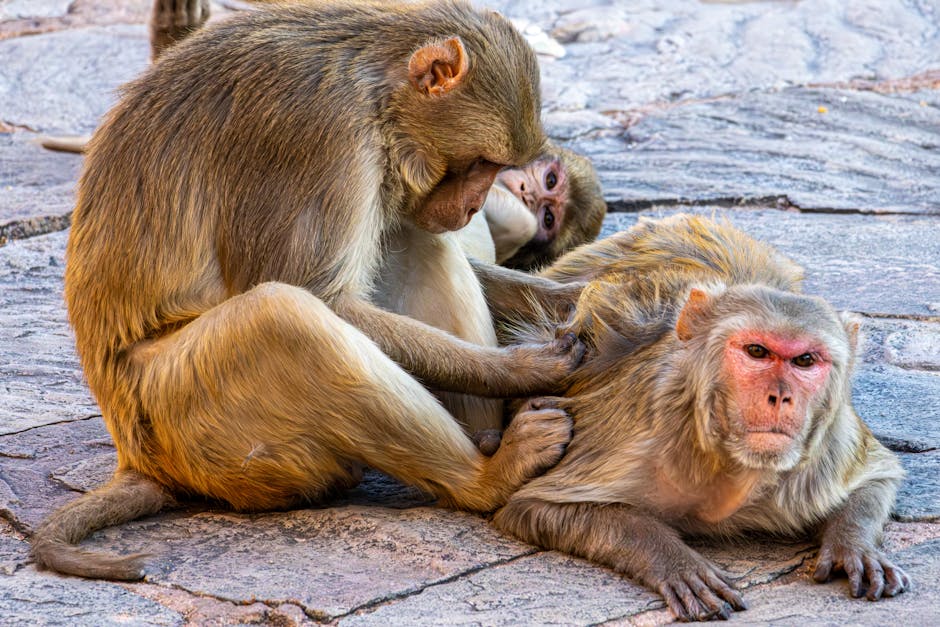
Young primates learn essential survival skills by watching adults forage, climb, and interact socially within their troop.
Predator Avoidance Strategies
Natural selection has equipped prey animals with sophisticated methods to evade predators. These strategies range from physical adaptations to complex behavioral responses.
Rabbits employ a zigzag running pattern to confuse predators during escape attempts. Their powerful hind legs enable sudden bursts of speed reaching up to 35 miles per hour.
Meerkats take turns acting as sentinels, standing upright on hillsides to scan surroundings for threats while others forage safely below.
These coordinated efforts significantly increase survival rates across various ecosystems worldwide.
Reproductive Behaviors and Mating Rituals
Mating rituals serve dual purposes: attracting suitable partners and establishing reproductive fitness. These displays vary dramatically between species based on evolutionary pressures.
Bowerbirds construct elaborate nests decorated with colorful objects to impress potential mates. Some males spend months gathering materials for these display sites.
Frogs engage in competitive calling sessions where dominant individuals produce louder, longer calls to attract females and intimidate rivals simultaneously.
Environmental Influences on Behavior
Animal behavior is deeply influenced by environmental factors ranging from climate conditions to human activity. Understanding these influences helps explain why certain behaviors emerge in different contexts.
Urban foxes have adapted nocturnal habits due to increased daytime human presence and reduced natural cover. This shift enhances their chances of avoiding detection while scavenging.
Oceanic temperatures affect migration patterns in marine life. For instance, warmer waters prompt earlier spawning seasons in some fish populations.
The Role of Play in Development
Play serves multiple functions in animal development including motor skill refinement, social bonding, and problem-solving practice. It appears in nearly all vertebrate species.
Kittens engage in mock battles that sharpen their reflexes without actual harm. These games help them prepare for real predatory scenarios later in life.
Elephant calves participate in playful water activities that teach them how to swim effectively and build trust among herd members.
Studies show that animals deprived of adequate play opportunities may exhibit abnormal behaviors later in life, highlighting its importance in healthy development.
Stress Responses and Coping Mechanisms
When faced with stressors, animals activate physiological and behavioral coping mechanisms. Recognizing these signs can greatly enhance our ability to support them.
Pets showing excessive grooming or destructive chewing might be experiencing chronic stress. Identifying underlying causes is essential for effective intervention.
Wild animals cope through dispersal, altering routines, or seeking alternative habitats when environmental changes threaten their usual way of life.
Human Impact on Animal Behavior
Our expanding influence on natural landscapes inevitably alters animal behavior patterns. Some adjustments benefit species while others pose significant challenges.
Artificial lighting disrupts circadian rhythms in many nocturnal animals, affecting feeding schedules and mating cycles. Light pollution has been linked to decreased reproduction success in several bird species.
Conservationists work tirelessly to mitigate negative impacts through habitat restoration projects and creating wildlife corridors connecting fragmented territories.
Observation Techniques for Better Understanding
Gaining insight into animal behavior requires careful observation techniques tailored to each species’ characteristics. Developing these skills improves our capacity to interpret their world accurately.
Videography provides invaluable documentation allowing researchers to analyze movements and interactions frame-by-frame at leisure. Time-lapse photography reveals patterns invisible during direct observations.
Field journals containing detailed notes about weather conditions, time of day, and observed behaviors offer context crucial for accurate interpretation of data collected in nature settings.
Conclusion
Exploring animal behavior unveils fascinating aspects of the natural world that challenge our assumptions about intelligence and emotion in non-human species.
By cultivating awareness of these behaviors, we become better stewards of the environment and more compassionate caretakers for the countless creatures sharing our planet.

news is a contributor at AnimalShelterTips. We are committed to providing well-researched, accurate, and valuable content to our readers.
You May Also Like


About the Author
news
Related Articles
Shelter Resources: Essential Tools and Resources
May 13, 2026
Quick Shelter Resources Solutions Under 30 Minutes
May 13, 2026
Shelter Resources Best Practices 2025
May 12, 2026